Essential Farrier Tools
Professional farriers carry a curated set of tools developed over centuries. Each has a specific purpose — using the wrong tool or a dull tool leads to poor results and increased risk of injury to the horse. Here's what's in a professional farrier's box.
Professional Farrier Tools
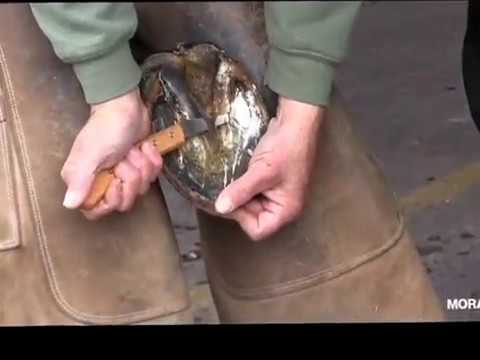
Hoof Knife
The primary hand tool for trimming the sole, frog, and bars. Available in left- and right-handed versions. A sharp knife cuts cleanly and safely — a dull one requires force and causes slipping.
🔑 Must be kept razor-sharp at all times
Hoof Nippers
Large, heavy-duty cutting pliers used to trim excess hoof wall length before rasping. Available in various jaw lengths; the right size matters for control. Dull nippers crush rather than cut, stressing the hoof.
🔑 Jaw sharpness determines trim quality
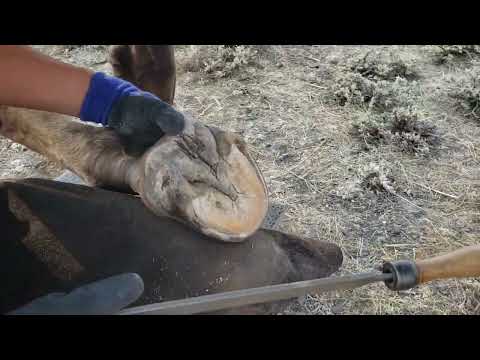
Hoof Rasp
A large, coarse file used to level the bearing surface of the hoof wall and smooth nail clinches. The rasp does the fine balancing work that nippers can't. Worn rasps take much longer and leave a rougher surface.
🔑 Replace frequently — dulls fast
Driving Hammer
A lightweight hammer specifically designed for driving horseshoe nails. The head shape allows nail driving at the correct angle to emerge at the nail hole without splitting the hoof wall.
🔑 Balance and weight matter for precision
Clinch Cutter (Buffer)
A chisel-like tool used to cut the clinches (bent nail tips) before removing a shoe. Attempting to pull shoes without cutting clinches first tears chunks of hoof wall.
🔑 Non-negotiable step before shoe removal
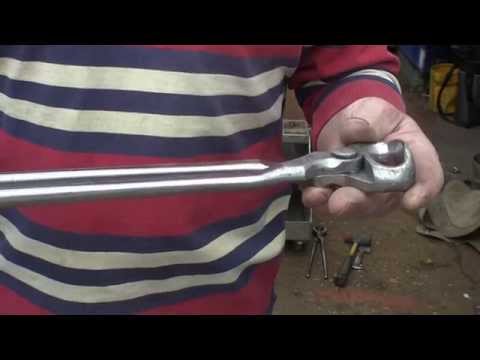
Pull-offs (Shoe Pullers)
Specialized pliers designed to safely pry and remove shoes after clinches are cut. The curved jaws work under the shoe from heel to toe without levering against the hoof wall.
🔑 Always cut clinches first
Hoof Gauge (Level)
Measures hoof angle and heel height, ensuring the hoof is balanced front-to-back and side-to-side. Critical for corrective work and for maintaining consistent angles across resets.
🔑 Essential for corrective shoeing
Clinching Tongs
Used to bend and clinch (fold down) the tips of nails that emerge through the hoof wall. Proper clinching locks the shoe in place and prevents sharp nail tips from catching on anything.
🔑 Clinch angle determines shoe security
Nail Puller (Crease Nail Puller)
A specialized tool for gripping and pulling individual nails from the shoe crease. Used when a nail bends during driving or when removing a shoe without full pull-offs.
🔑 Prevents broken nail shanks in the hoof
Forge & Hot Shoeing Equipment
Hot shoeing — heating the shoe for fitting and shaping — produces a better fit than cold shoeing and is the mark of a skilled craftsman farrier. The sealed burn seals the white line and allows more precise seating.
Forge Equipment
Propane Forge
The modern farrier's forge — a compact, portable propane-fired unit that heats shoes to working temperature (bright orange) in 2–3 minutes. Replaced the traditional coal forge for field work.
Anvil
The steel working surface for shaping hot shoes. Farriers use various horn shapes and table areas for different bending tasks. A quality anvil rings clearly and doesn't absorb hammer energy.
Tongs
Used to hold hot shoes on the anvil and carry them to the horse for fitting. Different jaw styles for different shoe types. Never touch a shoe that's been in the forge — it stays hot for several minutes.
Turning Hammer
A heavier hammer used for shaping shoes on the anvil. The rounded cross-peen is used for drawing out metal; the flat face for general shaping. Different from the lighter driving hammer.
Slack Tub (Quench Bucket)
A bucket of water used to cool hot shoes after shaping. Plunging a hot shoe into the tub hardens it slightly and stops further shape changes. Also used to test if a shoe is cool enough to handle.
Hardy & Hardies
Cutting tools that fit in the square hole on the anvil face. The hot shoe is placed over the hardy and struck with a hammer to cut without needing a second tool. Used for heel trimming and shaping.
🧰 What Horse Owners Should Keep On Hand
You don't need a farrier's full kit — but these basics can prevent a small problem from becoming a big one between appointments.
- Hoof pick (with brush): Use daily. Buy several and keep them everywhere — barn, trailer, tack room. A pick with a stiff brush on the back cleans the sole more effectively.
- Hoof knife: For trimming loose or ragged frog material in an emergency, or paring around an abscess location your vet has identified. Keep it sharp.
- Shoe puller: If a shoe goes partially loose, you need to pull it — a flapping shoe can cause serious injury. Attempt removal only if you can do it safely; otherwise call your farrier immediately.
- Duct tape & vet wrap: For temporarily protecting a bare hoof or poulticing an abscess after your vet or farrier has treated it.
- Thrush treatment: Keep a commercial thrush remedy on hand — thrush moves fast in wet conditions. Copper sulfate solution or commercial products like Thrush Buster are effective.
- Hoof conditioner: For dry climates or hooves that chip excessively. Apply to the coronary band and hoof wall — not the sole.
- Flashlight or headlamp: For examining a hoof in poor light — critical when checking for the source of lameness after hours.
Watch & Learn
Four hand-picked videos — tap any thumbnail to play.

🧰 Tools
The Farrier's Tools
Equine Distance Learning
🧰 Tools
How to Use a Hoof Knife with Chris Gregory
Morakniv
🧰 Tools
Tools of the Trade
Gary Huston
🧰 Tools
How to Use Your Hoof Rasp
Jessica Isbrecht