Why Alternative Materials Exist
Steel has been the standard horseshoe material for centuries because it is strong, durable, inexpensive, and easy to work. A skilled farrier can shape a steel shoe to any configuration on an anvil and nail it to nearly any horse. For the majority of horses doing most types of work, mild steel remains the best overall choice.
But steel has real limitations that create genuine problems for specific horses and situations:
- Weight: A standard steel shoe weighs 150–200g. Multiply by four shoes and you add 600–800g of rotational mass to the limbs. In disciplines where stride efficiency matters — racing, high-level sport horses — that weight costs real performance.
- Concussion transmission: Steel is rigid. It transmits ground impact directly up the limb. Horses with thin soles, post-laminitic damage, or high concussion sensitivity experience more pain and wear on hard surfaces when shod in steel than in materials that absorb impact.
- Nail requirement: Every steel shoe nailed conventionally introduces holes through the hoof wall. When wall quality is poor — from laminitis, white line disease, or chronic damage — there is no sound wall left to nail through. Steel cannot be applied without nailing. Alternative systems can.
- Surface safety: Metal shoes on indoor arenas, barn floors, trailer ramps, and pavement create slip hazards and surface damage. Composite and rubber shoes are significantly gentler on all of these.
Alternative shoe materials address one or more of these limitations. They are not universally better than steel — they are better for specific horses in specific situations. The right material choice depends on what problem you're trying to solve.
Many horse owners assume steel is just what horseshoes are made of. It isn't — it's what they've traditionally been made of. Every shoeing is a material choice, and the farrier who never considers alternatives isn't making a fully informed decision. Ask your farrier whether an alternative material might benefit your horse.
Aluminum Shoes
Aluminum horseshoes weigh approximately one-third of comparable steel shoes — 50–70g versus 150–200g for steel. That weight reduction is significant for racing, where the energy cost of swinging a heavy limb compounds over thousands of strides. Thoroughbred racehorses have worn aluminum "plates" since the 19th century and continue to do so today. The biomechanical advantage is real and measurable.
Modern aluminum alloys are substantially stronger than early versions, but aluminum remains softer than steel and wears faster on hard and abrasive surfaces. A racing plate on a Thoroughbred working on a dirt oval may last 2–3 weeks. The same aluminum shoe on a horse hacking on gravel roads would be impractical. Aluminum works because racehorses are replaced on tight schedules regardless of wear, and the surface they work on is relatively consistent and gentle on shoe material.
Nailing aluminum requires more precision than steel — the softer material can split if nails are driven with too much force or at a poor angle. Farriers experienced with aluminum develop a feel for it; it is not simply steel that happens to be lighter.
Outside of racing, aluminum is widely used in upper-level dressage, show jumping, and eventing — disciplines where limb weight affects movement quality and energy efficiency across long competition days. The lighter shoe reduces the energy required to elevate and advance the limb, which becomes significant in collected work and over extended distances.
Sport horse aluminum shoes are typically heavier and more substantial than racing plates — they must withstand the concussive forces of jumping and the lateral stresses of dressage work. The tradeoff between weight savings and durability is calibrated to the discipline: show jumping shoes are heavier than racing plates but lighter than everyday steel.
Aluminum sport shoes are typically reset on the same 5–7 week schedule as steel but may need replacement (rather than reset) more frequently depending on work intensity and footing.
When to Consider Aluminum
- Performance horses where limb weight reduction produces measurable benefit: racehorses, upper-level sport horses
- Horses with high energy expenditure over long competition days: eventing, endurance with shoes
- Horses where the vet or farrier has identified limb weight as a contributing factor to movement quality
- Not appropriate for horses working extensively on abrasive surfaces (gravel, pavement) where steel's durability is needed
Titanium Shoes
Titanium is the premium horseshoe material — it offers the best strength-to-weight ratio of any metal used in horseshoes. Lighter than steel, stronger than aluminum, and extraordinarily resistant to wear, a titanium shoe may last two to three reset cycles where a steel shoe would be replaced. The catch is cost and workability: titanium shoes are expensive (often $80–$150 per shoe or more), and working titanium on an anvil requires specialized equipment and skills. Most farriers cannot forge titanium — it must be ordered to specification.
Titanium is primarily used in elite sport horses where the investment is justified by the horse's value, the precision required, and the long-term cost savings from reduced shoe replacement. A horse on a three-year Olympic preparation program that would otherwise consume a dozen steel shoes might run on four or five titanium shoes over the same period.
Titanium shoes are available from specialty manufacturers in limited configurations — they cannot be extensively modified at the forge like steel. If a horse needs significant corrective shaping, titanium is unlikely to be the right material unless the manufacturer can accommodate the specification.
The cost only makes sense for horses whose value, work demands, and competitive schedule justify the investment. For the average pleasure horse or amateur competition horse, steel or aluminum will serve as well at a fraction of the cost. Titanium earns its price at the elite end of the performance market.
Polyurethane & Composite Shoes
Polyurethane and composite shoes — made from high-density plastics, fiberglass-reinforced polymers, or rubber-plastic compounds — represent the fastest-evolving category in horseshoe technology. They offer properties that no metal can match: true shock absorption. Where steel and aluminum transmit ground impact up the limb, polyurethane absorbs a significant portion of that impact before it reaches the hoof. For horses with thin soles, post-laminitic damage, or any condition where ground concussion contributes to pain, this property is clinically significant.
How They're Applied
Composite shoes are applied two ways:
- Nail-on composites: Shoes with metal nail inserts molded into the composite body. Applied like a conventional shoe with standard nails. Combines the shock-absorbing body of composite with the familiar security of nail application. The Sigafoos and some EDSS products use this approach.
- Glue-on composites: Applied entirely with adhesive — no nails. The composite shoe bonds to the hoof wall through a urethane or acrylic adhesive applied to the inside of a cuff that wraps the lower hoof wall. No nail holes, no wall penetration. Particularly valuable when hoof wall quality makes nailing impossible or undesirable. EasyCare, Imprint, Dalric, and Glushu all offer glue-on composite systems.
Key Advantages
- Shock absorption: Measurably superior to any metal material — reduces peak impact force transmitted to the hoof and limb
- Lighter than steel: Most composite shoes are lighter than comparable steel, though heavier than aluminum
- Nail-free options: When wall integrity is compromised, glue-on systems allow shoeing when conventional nailing is impossible
- Surface friendly: Safe on arena floors, barn aisles, trailer ramps, and all indoor surfaces that metal damages or creates slip hazards on
- Thermal neutrality: Plastic does not conduct heat and cold the way metal does — relevant in extreme weather conditions
Key Limitations
- Durability varies widely: Composite shoe lifespan depends heavily on brand, horse weight, and working surface. Some last a full 6-week cycle; others need replacement sooner on abrasive terrain
- Adhesive glue-on systems require skill: Proper hoof preparation, adhesive application, and curing technique are essential — poorly applied glue-ons fail prematurely and leave adhesive residue on the hoof wall that must be carefully removed
- Less modifiable: Unlike steel, composite shoes cannot be extensively shaped at a forge. The farrier works with what the manufacturer produces
- Higher cost per shoe: Composite shoes cost significantly more than steel — though the therapeutic value may justify this in appropriate cases
While composite and glue-on systems are most widely discussed in therapeutic contexts, they work perfectly well for sound horses on appropriate surfaces. A horse hacking primarily on roads or hard arena floors that shows subtle forelimb stiffness may benefit significantly from a composite shoe even without a specific diagnosis. The shock absorption properties benefit any horse subjected to repetitive high-impact surfaces.
Rubber Shoes
Rubber horseshoes occupy a specific niche — horses working primarily on hard indoor surfaces (concrete, asphalt, cobblestone, barn aisles) where metal shoes create unacceptable slip hazard or damage to the flooring. The equine police and mounted patrol community drove significant development of rubber shoeing — a horse patrolling city streets needs reliable grip on pavement in all weather conditions that steel cannot reliably provide.
Vulcanized Rubber Shoes
Traditional rubber horseshoes use vulcanized rubber — the same process used for automobile tires — to produce a shoe that provides excellent grip on smooth, hard surfaces without the slip hazard of metal. Brands like Mustad Plas-Trac and similar products have served the police horse market for decades. These are nailed on like conventional shoes but the rubber body grips surfaces that steel would slide on.
Equine Fusion & Boot-Shoe Hybrids
A newer category blends the concept of a hoof boot with a more permanent shoe application. The Equine Fusion All Terrain shoe, for example, uses a thick rubber-composite sole with a built-in heel and wall support structure applied with adhesive. The result is something between a boot and a shoe — more protective than a thin metal shoe, more secure than a removable boot, suitable for horses that need continuous protection on varied terrain.
When Rubber Makes Sense
- Horses working primarily on polished concrete, smooth asphalt, cobblestone, or slippery indoor surfaces
- Mounted police and patrol horses
- Horses in facilities where metal shoes damage flooring (rubber arena footing with embedded metal particles creates problems)
- Horses with significant concussion sensitivity who also need reliable traction
- Not appropriate for horses doing significant work on soft or natural terrain, where metal or composite provides better performance
Glue-On Systems — A Category of Their Own
Glue-on horseshoe systems deserve their own section because the application method — adhesive rather than nails — creates fundamentally different clinical possibilities regardless of what material the shoe itself is made from. The three scenarios where glue-on systems are not just an option but often the only viable option:
Compromised Hoof Wall
When laminitis, white line disease, or other conditions have destroyed the nail zone — the dense outer hoof wall through which nails are driven — there is nowhere to put nails. A glue-on shoe applies the shoe through a cuff that bonds to whatever sound wall remains, distributing load through the adhesive bond rather than through nail holes in weakened tissue. This allows shoeing to continue (and therapeutic support to be provided) in horses whose walls would crumble around conventional nails.
Foals
Young foals requiring corrective shoeing for angular limb deformities have walls too thin for reliable nailing. Glue-on extensions and corrective shoes are the standard approach for foal corrective work — the adhesive bond holds securely without nail holes that a thin foal wall cannot support. See the Foal Hoof Care Guide →
Performance & Athlete Horses
Some performance horses benefit from glue-on applications not because of pathology but because the elimination of nail holes produces a stronger hoof wall structure. Every nail hole is a stress concentration — a point where the wall is weakened and cracks more easily. Glue-on systems preserve wall integrity entirely. Some elite sport horse programs use glue-ons on competition animals for this reason alone.
How Glue-On Application Works
The process is more involved than nailing and leaves no room for error:
- Hoof preparation: The wall must be clean, dry, and free of any oil, thrush treatment, or moisture. Any contamination compromises the adhesive bond. The wall is often rasped lightly to create a fresh surface.
- Shoe fitting: The cuff shoe is sized and trimmed to fit the hoof exactly. Unlike a nailed shoe which can be adjusted at the nail holes, a glue-on must fit correctly before adhesive is applied.
- Adhesive mixing and application: Two-part urethane or acrylic adhesive is mixed and applied to the inside of the cuff. Working time is short — typically 2–4 minutes before the adhesive begins to set.
- Positioning and holding: The shoe is pressed onto the hoof and held firmly until the adhesive sets — typically 3–5 minutes depending on temperature. Temperature significantly affects cure time; cold temperatures slow curing; very hot conditions accelerate it.
- Curing: Full bond strength is achieved in 15–30 minutes. The horse should stand quietly during this period.
- Removal: Glue-on shoes are removed with a solvent (typically acetone) applied to the adhesive bond, or carefully cut away. Never pry a glue-on shoe off dry — this removes hoof wall with it.
Applying glue-on shoes correctly is harder than nailing, not easier. The preparation requirements are strict, the working time is short, and a poorly applied glue-on that fails prematurely can damage more wall on removal than the original condition. This is not a DIY skill — find a farrier with documented glue-on experience for anything beyond the most basic applications.
Leading Brands Guide
| Brand | Type | Key Products | Best Known For |
|---|---|---|---|
| EasyCare | Composite glue-on & nail-on | EasyShoe Sport, EasyShoe Performance, EasyShoe One, EasyShoe 3D | The most widely distributed composite shoe line. EasyShoe One is a single-piece glue-on for horses needing nail-free application. Strong farrier community support. |
| Sigafoos / SoundHorse | Composite nail-on & glue-on | Sigafoos Indirect Glue-On System | Developed by farrier KC La Pierre. The indirect application method uses a nail-on shell that can also be glued — a hybrid approach that gives the farrier options. Strong therapeutic track record. |
| Imprint / Dalric | Composite glue-on cuff | Imprint shoe system, Dalric cuff shoes | Dalric cuff shoes are the standard in laminitis management glue-on work — the cuff wraps the entire lower wall, providing maximum support when the nail zone is gone. Widely used in severe laminitis cases. |
| Glushu | Composite glue-on | Glushu Standard, Glushu Therapeutic | UK-origin glue-on system with a large following in Europe. Simple cuff design, straightforward application process, good therapeutic applications including laminitis recovery. |
| EDSS (Equine Digital Support System) | Aluminum & composite | PLR Sport, PLR Race, EDSS therapeutic plates | Gene Ovnicek's system based on wild horse hoof research. Provides specific ground-surface relief geometry that has become influential in therapeutic shoeing methodology worldwide. |
| Nanric | Composite therapeutic | Ultimate Cuff, Advance Cushion Support (ACS) | Nanric's ACS system provides full sole support in a composite cuff — particularly valuable for severe laminitis with sole drop. Advanced therapeutic applications requiring specialist farrier knowledge. |
| Equine Fusion | Rubber-composite hybrid | All Terrain Shoe, Active Slim Shoe, Jogging Shoe | Boot-shoe hybrid applied with adhesive. Popular for horses needing continuous all-terrain protection without conventional metal. Good for trail and endurance where hoof boots may be impractical. |
| HOOF-it | Flexible plastic | Natural Flex Horseshoe | A clip-on flexible plastic shoe requiring no nails, no glue, no farrier — designed for owner application. Limited load-bearing capacity but useful as emergency protection and for barefoot horses in transition needing minimal protection. |
| St. Croix | Aluminum | Aluminum Lite, Aluminum Elite, Racing Plates | One of the most widely used aluminum shoe lines in North American racing and sport horse work. Strong farrier familiarity, consistent quality, broad size range. |
| Mustad | Aluminum & steel | Aluminum racing plates, SteelShoes line | One of the oldest farrier supply companies. Aluminum racing plates widely used in Europe and increasingly in North America. Also produces specialty steel shoes. |
Full Comparison Table
| Material | Weight vs Steel | Durability | Shock Absorption | Nail Required | Cost | Best Application |
|---|---|---|---|---|---|---|
| Mild Steel | Baseline | Excellent | Low | Yes | $ | Everyday work horses, most disciplines, standard maintenance |
| Aluminum | ~⅓ of steel | Moderate | Low–Moderate | Yes | $$ | Racing, sport horses, performance where limb weight matters |
| Titanium | ~½ of steel | Exceptional | Low | Yes | $$$$ | Elite sport horses where durability + low weight justify cost |
| Polyurethane / Composite | Light–Moderate | Variable | Excellent | Optional | $$$ | Thin soles, high concussion sensitivity, post-laminitic, arena surfaces |
| Rubber | Moderate | Moderate | Good | Yes (usually) | $$ | Hard indoor surfaces, police horses, slip-hazard environments |
| Glue-On (any material) | Variable | Variable | Variable | No | $$$–$$$$ | Compromised wall, foal corrective work, performance where nail holes are undesirable |
| Flexible Plastic (clip-on) | Very light | Low | Good | No | $ | Emergency protection, minimal protection for barefoot horses |
How to Choose
The decision tree is straightforward once the horse's specific needs are identified:
- Is the hoof wall too compromised to nail? → Glue-on system. Consult your farrier and vet to determine which system suits the extent of wall damage.
- Is shock absorption the primary need? → Polyurethane or composite shoe, with or without pads depending on severity of sole sensitivity.
- Is weight the primary concern? → Aluminum for most horses; titanium only where the investment is justified by the horse's value and competition demands.
- Is slip hazard on hard indoor surfaces the issue? → Rubber shoe, or a composite shoe with appropriate tread pattern.
- Is this a foal needing corrective work? → Glue-on composite extension, applied by a farrier experienced with foal corrective work.
- Is the horse otherwise sound and working on mixed terrain? → Steel is almost certainly still the right answer. Alternative materials solve specific problems; they are not universally superior.
The best alternative shoe applied by a farrier without experience in that material will underperform a properly fitted steel shoe. Before choosing an alternative material, confirm your farrier has hands-on experience with it — not just theoretical familiarity. Composite and glue-on systems particularly require technique that takes practice to develop.
Watch & Learn
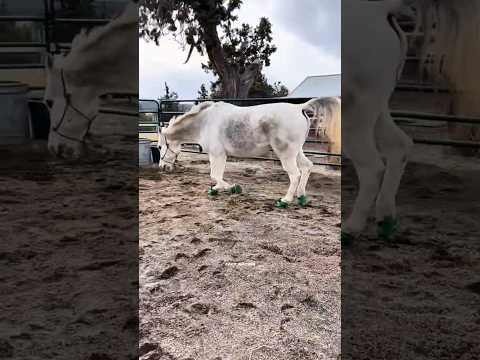
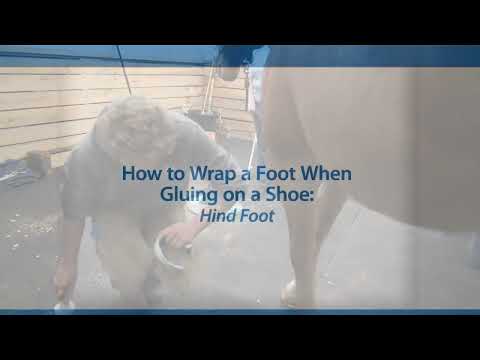
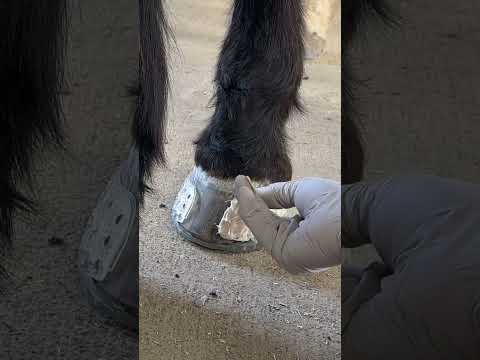
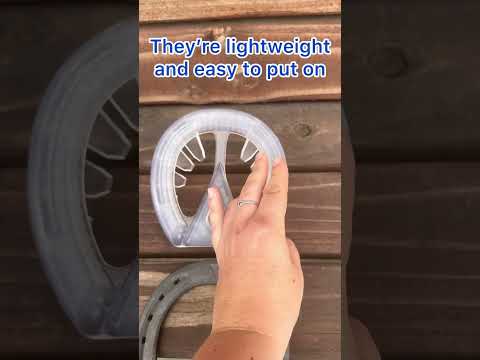
Four videos covering alternative horseshoes in practice — from a broad overview of what's changing in the industry, to hands-on composite and glue-on application. Tap any thumbnail to play.