Factory vs. Custom — What's the Difference?
Understanding where shoes come from, and why it matters to your horse
The overwhelming majority of horseshoes applied every day come from a factory — machines stamp them from steel or aluminum bar stock, punch the nail holes, and press the crease in a process that produces thousands of identical shoes per hour. These are pre-made, sized, and sold in boxes. A skilled farrier modifies them at the anvil before nailing — bending, shaping, adding clips or extensions — but the base shoe began its life on a production line.
Custom shoes are made from bar stock by the farrier at the forge, starting from nothing. Every dimension — width, thickness, length, branch width, toe shape, clip position, heel length — is determined by the farrier for that specific horse's hoof and clinical need. Custom work is slower, requires more equipment and skill, and costs more. It is also the only way to achieve certain therapeutic outcomes and the mark of the highest level of the trade.
| Factor | Factory Shoe | Custom Forged |
|---|---|---|
| Starting point | Pre-made, stamped blank in standard sizes | Raw bar stock — steel, aluminum, or specialty metal |
| Fit | Good with modification; ideal for standard hooves | Exact — built for the individual hoof |
| Time | Faster — modification only | Slower — built from scratch |
| Cost | Lower material cost; passed on as standard shoeing price | Higher — premium charged for craft and time |
| Best for | Sound horses, routine maintenance, most discipline applications | Unusual hoof shapes, complex therapeutic needs, specialty disciplines |
| Customization | Limited — welding, bending, clip addition at the anvil | Unlimited — every dimension under the farrier's control |
| Farrier skill required | Journeyman level | Advanced — significant forge experience required |
Most horses in most situations are well-served by quality factory shoes properly fitted and applied. The distinction matters most for horses with therapeutic needs, unusual conformations, or discipline-specific requirements where off-the-shelf solutions can't achieve the exact outcome needed. A farrier who can make his own shoes has options that a farrier who can only modify factory shoes doesn't.
Shoe Materials: Steel, Aluminum, Titanium & More
What shoes are made of determines weight, durability, traction, and therapeutic properties
Mild Steel
The standard material for the vast majority of horseshoes — both factory-made and hand-forged. Low-carbon mild steel is affordable, workable at forge temperatures, and durable enough for most applications. It welds well, holds clips, and accepts borium or road nail additions easily. Factory shoes are typically made from medium-carbon steel for slightly more hardness. A standard steel shoe on a performance horse lasts 6–8 weeks before the combination of hoof growth and shoe wear requires replacement.
Aluminum
Aluminum shoes weigh approximately one-third as much as comparable steel shoes — a significant advantage in disciplines where limb weight affects performance. Racehorses have been shod in aluminum (called "plates") since the 19th century. Modern aluminum alloys are far stronger than early versions, but aluminum remains softer than steel and wears faster on hard surfaces. Used extensively in Thoroughbred racing, standardbred harness racing, and some sport horse disciplines.
Advantages: dramatically lighter (30–50g vs 150–200g for steel), reduces energy cost per stride, dissipates concussion differently than steel. Disadvantages: wears faster, more expensive per shoe, harder to nail (softer metal requires precision), not ideal for horses worked on pavement or hard terrain.
Titanium
The premium material — titanium shoes offer the best strength-to-weight ratio of any horseshoe metal. Lighter than steel, stronger than aluminum, extraordinarily durable. A titanium shoe may last two or three reset cycles where a steel shoe would be worn through. The catch is cost: titanium shoes are expensive and difficult to work, requiring specialized equipment. Used primarily in elite sport horses where the investment is justified by the horse's value and the precision required.
Copper & Brass Inserts / Alloys
Some specialty shoes incorporate copper or brass inserts — not for structural reasons but because copper is thought to have antimicrobial properties that may reduce thrush in the frog area. Evidence is limited but the concept is sound: copper in contact with the moist frog environment may inhibit bacterial growth. These are niche products, more common in Europe than North America.
Polyurethane & Composite Shoes
See the full Alternative Horseshoes guide → for brands, comparison, and application details.
Plastic and composite shoes — made from high-density polyurethane, fiberglass-reinforced polymers, or rubber compounds — have grown significantly in availability and quality. They offer exceptional shock absorption (plastic dissipates concussion dramatically better than metal), are lighter than steel, and are gentler on arena and barn floors. Applied with adhesive rather than nails in some systems, or nailed through metal inserts in others.
Brands like Sigafoos, Imprint, and Nanric's Ultimate Cuff have advanced composite shoeing significantly. Particularly valuable for horses with thin soles, high concussion sensitivity, or post-laminitic hooves where metal may conduct too much force to damaged laminae.
Magnesium Alloys
Even lighter than aluminum, magnesium alloys are used in some ultra-lightweight racing plates. Extremely expensive, difficult to work, and not widely available — primarily a specialist racing application where every gram of limb weight saved translates to improved performance economics.
| Material | Relative Weight | Durability | Cost | Best Application |
|---|---|---|---|---|
| Mild Steel | Heavy (baseline) | Excellent | $ | Everyday work horses, drafts, most disciplines |
| Aluminum | Light (~⅓ steel) | Moderate — wears faster | $$ | Racing, sport horses, performance where weight matters |
| Titanium | Light (~½ steel) | Exceptional | $$$$ | Elite sport horses, horses needing maximum durability + low weight |
| Polyurethane/Composite | Very light | Variable | $$$ | Thin soles, high concussion, post-laminitic horses, glue-on applications |
| Magnesium Alloy | Ultralight | Poor — specialist only | $$$$$ | Elite sprint racing |
Factory Shoe Types — Every Style Explained
The complete catalog of production horseshoes and what each is designed to accomplish
Custom Forged Shoes — What a Farrier Makes by Hand
When factory shoes reach their limit, the forge is where the real work begins
A farrier who can work a forge and anvil to create shoes from bar stock is operating at the highest level of the trade. The American Farrier's Association's Certified Journeyman Farrier (CJF) examination requires the candidate to hand-forge shoes to specification — because the ability to make any shoe needed for any situation is the mark of true mastery. Custom forging isn't just for unusual cases; it's the standard of excellence that separates journeyman farriers from craftsmen.
What a Farrier Can Create from Bar Stock
Starting from straight bar stock — purchased in steel, aluminum, or specialty metals — a skilled farrier can produce:
- Any standard shoe type in any size: A custom-built fullered shoe for a draft horse with unusual hoof dimensions that no factory size fits properly.
- Modified toe shapes: Rolled, rockered, squared, pointed, or any combination — each changing how the hoof breaks over at the end of the stride.
- Clips: Clips are tabs of metal folded up from the shoe surface that fit against the hoof wall to prevent shoe shifting. Quarter clips (sides), toe clips (front), and heel clips can be added anywhere on a custom shoe. Factory shoes come with limited clip options; custom forging allows clips wherever the hoof needs them.
- Extensions and branches: A branch extended laterally beyond the hoof wall on one side — medial or lateral — to correct or support a limb deviation. The exact length and angle can only be determined at the forge.
- Combination bars: An egg bar fused to a heart bar, creating simultaneous palmar support and frog loading. Not available from any factory — only buildable by hand.
- Patten bars and elevation shoes: Any degree of heel elevation, built to the millimeter required by the horse's specific rotation angle as shown on radiograph.
- Racing plates to exact specification: Top-level racing plate farriers build custom plates sized and balanced for the individual horse's stride characteristics.
- Specialty therapeutic shapes: The Nanric Ultimate shoe, the Steward Clog, and other advanced therapeutic footwear are examples of farrier-designed shoes that began as custom forge work before becoming commercially produced.
The Forge Process
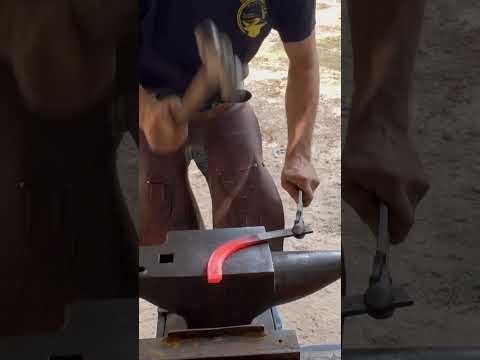
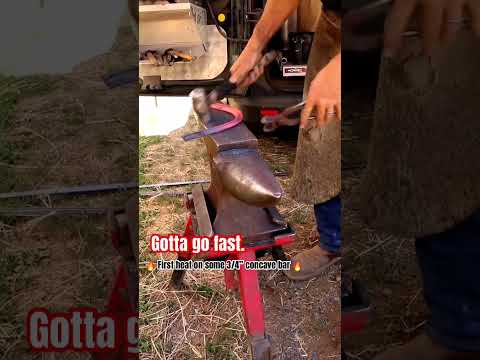
Bar stock is heated in a propane forge to working temperature — bright orange or yellow-orange, roughly 1,800–2,200°F. At this temperature, steel moves under the hammer like stiff clay. The farrier works quickly — a shoe cools to non-workable temperature in 30–60 seconds. Multiple heats are typically required: one to rough-shape the shoe, another to refine, another to add the fuller, another to punch nail holes. Each step requires the steel to return to the forge.
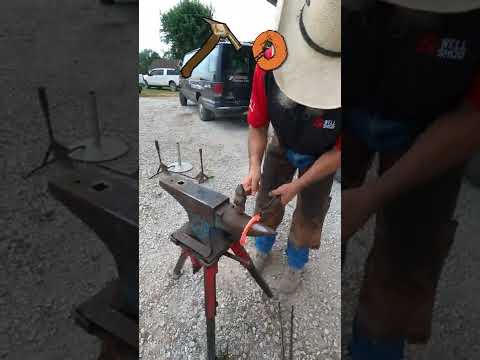
The anvil's different surfaces — the flat table, the rounded horn, the step, the hardy hole — each serve different shaping functions. A skilled farrier reads the glowing steel's color to judge temperature and acts precisely on each heat. The result is a shoe built exactly to the hoof in front of him — something no factory can replicate.
The American Farrier's Association's Certified Journeyman Farrier (CJF) exam requires candidates to hand-forge a specific set of shoes to defined tolerances under time pressure, in addition to a shoeing practical and written examination. This ensures that certified journeyman farriers can produce custom work when the situation demands it — not just modify factory blanks. When choosing a farrier for a horse with complex needs, AFA CJF certification indicates this level of forge competency.
Shoeing by Discipline
How the demands of different equestrian sports drive specific shoeing choices
The Rolled Toe — Science & Rising Popularity
Why one of the oldest ideas in natural hoof care is now backed by peer-reviewed biomechanics research — and crossing into mainstream farriery
The rolled toe — beveling the ground-bearing edge of the hoof wall or shoe toe upward so the hoof pivots smoothly rather than hitting flat — has become one of the most discussed topics in modern farriery. It isn't new. Wild horses have been wearing it naturally for thousands of years. What's new is the science confirming exactly why it works, the depth of benefit it delivers, and the growing consensus that it belongs on nearly every horse — not just barefoot horses or those with diagnosed lameness problems.
Origin: The Wild Horse Connection
The scientific interest in rolled toes traces back to wild horse research in the late 1980s and 1990s. Farrier and researcher Jaime Jackson spent four years measuring over 1,000 wild horse hooves at BLM corrals in the Great Basin. The finding that reshaped a generation of practitioners: wild horses moving on abrasive rock and hard desert terrain develop a natural bevel at the toe through constant wear — a rounded edge where the wall meets the ground, now widely called the mustang roll.
These horses showed lameness rates estimated at under 2% in healthy populations — compared to 15–20% in domestic horses. The shape that nature produces through movement over hard ground is not incidental. It is functional. Domestic horses on soft ground, in stalls, or in shoes never develop it naturally. The mustang roll must be applied artificially — but the hoof it produces mirrors the wild horse template that evolved over millennia.
Jackson described the mustang roll as nature's horseshoe — the hoof's built-in protection against the mechanical forces that accumulate at the toe with every stride.
The Biomechanics: What Happens at Breakover
To understand why the rolled toe matters, you have to understand breakover — the moment at the end of each stride when the heel rises and the hoof pivots over the toe before leaving the ground. This is the highest-stress moment in the entire stride for the structures of the lower limb.
At breakover, the deep digital flexor tendon (DDFT) reaches peak tension — it is being stretched as the hoof pivots and the coffin bone is pulled forward. The navicular bone acts as a pulley over which the DDFT runs, and at peak tension this pressure is transmitted directly to the navicular apparatus. The coffin joint is also under maximum rotational force. The longer breakover takes, and the more abrupt the edge the hoof pivots over, the higher the peak force transmitted through all of these structures.
A long toe — the most common hoof fault in domestic horses — delays the hoof leaving the ground and extends the duration of peak DDFT loading. The force doesn't just spike higher; it stays elevated longer with each stride. Multiply that by thousands of strides per ride and hundreds of rides per year and the cumulative damage becomes significant.
Rolling the toe moves the breakover point palmarly — toward the heel — and allows the hoof to exit the ground sooner and more smoothly. The DDFT tension spike is lower and briefer. The navicular apparatus experiences less peak pressure. The coffin joint rotates through less force. Every stride is slightly less stressful.
Twenty clinically sound Warmblood horses were trotted over a pressure and force measuring system with six infrared cameras, wearing standard flat shoes and shoes with a rolled toe in randomized order. The rolled-toe group showed a smoother hoof-unrollment pattern and measurably lower peak loading during breakover. The study concluded that shoeing sound Warmbloods with a rolled toe optimizes hoof-unrollment and lowers peak loading on the lesion-prone structures of the distal limb. This is the most-cited controlled study on rolled toe mechanics and forms the evidence base now referenced across the current farriery literature.
Rolled Toe vs. Raising the Heel — A Critical Distinction
For decades, the dominant therapeutic response to DDFT tension and navicular pain was to raise the heel — wedge pads, elevated heel shoes. The logic is sound: raising the heel reduces the angle between the DDFT and navicular bone, decreasing tension. And it works.
But heel elevation has a significant cost: it takes the frog off the ground. The frog must contact the ground to compress the digital cushion and pump venous blood back up the leg. A horse on permanent elevated heels develops frog atrophy, reduced digital cushion mass, and contracted heels — all of which reduce the hoof's natural shock-absorbing capacity and create their own problems over time.
The rolled toe addresses the same DDFT tension problem — but from the opposite end of the shoe. By shortening breakover at the toe, it reduces the peak DDFT loading during the push-off phase without interfering with the heel's function at all. The back of the foot remains in full contact with the ground. The frog loads normally. The digital cushion develops and maintains its mass. The heels remain open and functional.
This is why leading farriers and equine researchers increasingly describe the rolled toe not as a replacement for heel elevation in all cases, but as a lower-cost, lower-side-effect first step — and often a sufficient intervention on its own for mild to moderate palmar foot problems.
Shortens breakover duration — the hoof exits the ground sooner. Lowers peak DDFT tension at each stride. Reduces peak loading on the navicular apparatus. Decreases rotational force through the coffin joint. Reduces leverage on the laminae. Eliminates the sharp wall edge that promotes chipping and cracking. Grows out existing flares without thinning the wall. Allows breakover to be moved back without reducing vertical toe height beneath the coffin bone — critical because aggressive toe shortening can cause soreness by changing the coffin bone's relationship to the ground.
Three Versions — Mustang Roll, Rolled Toe Shoe, Rocker Shoe
The term "rolled toe" covers three related but distinct applications, each appropriate in different contexts:
Why It's Crossing from Barefoot into Mainstream Farriery
The mustang roll and rolled toe began as concepts associated with the barefoot trimming movement — and for years, conventionally-shod practitioners viewed them with suspicion as belonging to a different philosophical camp. That separation is dissolving. The peer-reviewed kinematic data doesn't care about shoeing philosophy. It shows measurable mechanical benefit on sound horses and even greater benefit on horses with existing palmar foot problems.
The 2025 systematic scoping review in Veterinary Surgery synthesizing the accumulated body of research on horseshoe effects on equine gait confirmed breakover manipulation as one of the most evidence-supported tools in farriery. AFA continuing education increasingly covers breakover science. Farriers trained in the past decade enter the trade understanding that breakover management is a routine consideration, not a specialty intervention.
The practical result: rolled toes are now being applied as a standard finishing step on many horses that show no lameness whatsoever — the same logic as changing oil before an engine problem develops. If every stride is mechanically slightly cleaner, the cumulative wear on the DDFT, navicular apparatus, and coffin joint is reduced over a working lifetime. Prevention is the most compelling argument, and it's winning the debate.
Ask your farrier whether they apply a mustang roll or bevel to the wall edge at every trim, and whether they use a rolled toe on your horse's shoes. If the answer is no and your horse has any history of navicular discomfort, DDFT issues, a long toe tendency, or simply a performance career that puts repetitive stress on the lower limb, it's worth a conversation about whether the modification is appropriate. It costs nothing on a barefoot horse and minimal additional time on a shod horse — the risk-to-benefit ratio is highly favorable.
Major Manufacturers & Brands
The companies that supply the shoes in most farriers' trucks
The horseshoe manufacturing market is dominated by a handful of companies that supply the global farriery trade. Most farriers develop brand loyalties based on the nail hole placement, steel quality, fuller consistency, and availability of specialty sizes. Some brands are better for hot-fitting; others are designed primarily for cold application.
Therapeutic Shoeing — Principles & Goals — Condition-by-Condition Guide →
The science and philosophy behind using the shoe as a medical tool
Corrective & Therapeutic Shoeing — overview guide →
Therapeutic shoeing is the use of specific shoe designs, materials, placements, pads, and modifications to manage or treat lameness conditions. It is not a substitute for veterinary diagnosis — it is a complement to it. The best therapeutic outcomes come from a precise diagnosis (which requires imaging, nerve blocks, and veterinary examination), followed by a collaborative plan between the veterinarian and farrier, executed by a farrier with both the mechanical skills and the anatomical knowledge to implement it correctly.
The fundamental tools of therapeutic shoeing manipulate five variables:
- Breakover point: Where and how the hoof pivots at the end of the stride. Moving the breakover point palmarly (toward the heel) reduces DDFT tension and coffin joint stress. Achieved through rolled toes, squared toes, or set-back shoes.
- Heel height and angle: Raising or lowering the heel changes the angle of the coffin bone and the tension in the DDFT. Wedge pads, elevated heel shoes, or heel lowering through trimming all alter this variable.
- Base of support: The area of ground contact under the hoof. Extending the base palmarly (egg bars, bar shoes) provides support behind the limb and reduces load on the palmar structures. Reducing the base at the toe reduces leverage on the laminae.
- Load distribution: Where weight is borne — wall, frog, sole, or some combination. Heart bars load the frog; pour-in pads distribute load uniformly; full pads protect the sole; glue-on systems can unload the wall entirely.
- Concussion and vibration: What the shoe transmits to the hoof at impact. Steel transmits more concussion than aluminum; polyurethane absorbs significantly more. For conditions where impact force contributes to pain, material selection matters.
Modern therapeutic shoeing is increasingly guided by radiography and MRI. A farrier working with radiographs of a laminitic horse can measure the exact rotation angle, sole depth remaining, and coffin bone position to calculate precisely how much toe to remove, what heel elevation is needed, and where the breakover point must be. Without this data, therapeutic shoeing is educated guesswork. With it, it's precision medicine. If your horse has a serious lameness condition and your farrier has never asked to see radiographs, ask why.
Condition-Specific Therapeutic Approaches
A deep dive into how shoeing addresses the most common serious hoof and lameness conditions
Laminitis & FounderInflammatory failure of the lamellar bond
Laminitis management is the most complex area of therapeutic shoeing — and the one where farrier skill most directly affects survival and recovery. The objectives are: relieve pressure on the rotating toe, support the sinking coffin bone, provide frog and sole support, and reduce DDFT tension that pulls the coffin bone further into rotation.
Acute phase (first 72 hours): The primary goal is simply removing the horse from any contributory cause (pasture, grain) and providing deep bedding that allows the horse to offload as it chooses. Some farriers apply frog support pads immediately; others prefer to wait for veterinary assessment and radiographs before intervening mechanically.
Subacute and chronic management: Once radiographs establish rotation angle and sole depth, the farrier's plan becomes specific. Common approaches:
- Heart bar shoes: Load the frog to transfer weight from the compromised wall laminae. Must be fitted precisely — pressure calibrated based on sole depth on radiograph.
- Reverse shoes: Extend support behind the limb while eliminating toe leverage. Counterintuitive but effective for moderate to severe rotation.
- Deep toe removal (dorsal wall resection): Removing the outer wall at the toe eliminates the mechanical leverage pulling the laminae apart. The exposed area is protected with pads and wraps while new wall grows.
- Wedge pad or elevated heel: Reduces DDFT tension by reducing the angle differential. The elevation needed is calculated from the rotation angle on radiograph.
- Pour-in pad: Provides uniform sole support, protecting the sole surface from ground contact as the coffin bone drops toward it.
- Glue-on systems: When wall quality fails — the common consequence of severe or repeated laminitis — glue-on shoes eliminate nailing and reduce wall stress entirely.
Laminitis management is measured in months and years, not weeks. Repeated radiographs track progress. The farrier-vet relationship here is not optional — it is the treatment.
Navicular SyndromePalmar foot pain — the leading cause of chronic front-end lameness
Navicular syndrome is managed — rarely cured — through a combination of veterinary treatment (nerve blocks, bisphosphonates, corticosteroid injections) and corrective shoeing. The shoeing objectives are: reduce DDFT tension, extend the base of support palmarly, and ease breakover. These three goals address the mechanical contributors to pain even when the underlying pathology cannot be reversed.
Egg bar shoes: The workhorse of navicular management. The extended heel bar moves the base of support behind the limb, reducing the loading on the navicular apparatus and providing a more comfortable landing. Many navicular horses show immediate comfort improvement when fitted with egg bars for the first time.
Raised heels: Elevating the heel angle reduces the angle between the DDFT and navicular bone, reducing tension. Wedge pads of 2–6 degrees are commonly used, either inside the shoe or as a built-in wedge on some shoe types. This is a management tool — the underlying problem remains. Some horses require permanent heel elevation.
Rolled or rockered toe: Shifting the breakover point rearward reduces the duration and force of DDFT loading at each stride. A simple and highly effective modification, often combined with egg bars.
Wide web shoes: A wider shoe distributes load across a larger area of the hoof wall, reducing peak pressure at any point. Used when the palmar foot is painful to direct pressure.
Pads and pour-ins: For horses with additional sole sensitivity or thin soles alongside navicular syndrome, pads protect the sole while the shoe addresses the mechanical issue above.
Long-term navicular management often requires the horse to be on a shorter trim cycle — 5–6 weeks — to prevent the heel from collapsing and the toe from growing long between visits, both of which worsen the condition.
Tendon & Ligament InjuriesDDFT tears, SDFT injuries, suspensory damage
Tendon injuries are managed with shoeing changes that reduce the mechanical load through the injured structure during the healing period. The specific modification depends on which tendon or ligament is injured.
Deep Digital Flexor Tendon (DDFT) tears: The DDFT is the primary focus of most therapeutic rear-of-foot shoeing. Elevating the heel reduces the angular load on the DDFT as the horse moves — typically achieved with wedge pads of 4–8 degrees or elevated heel shoes. Easing breakover reduces the peak DDFT loading at the push-off phase. Egg bars extend the base of support and further reduce DDFT load.
Superficial Digital Flexor Tendon (SDFT) injuries: The classic "bowed tendon" injury. Like DDFT injuries, heel elevation reduces loading — but the degree of elevation appropriate for SDFT vs. DDFT injuries may differ. Veterinary-farrier collaboration guided by ultrasound imaging of the lesion is essential for appropriate management.
Suspensory ligament injuries: The suspensory apparatus (proximal suspensory ligament and suspensory branches) is loaded at the moment the fetlock drops under weight. Shoeing modifications that raise the heels reduce fetlock drop and therefore reduce peak suspensory loading. This is a significant and often overlooked application of heel elevation.
Check ligament (inferior and superior): Desmitis (inflammation/tearing) of the accessory ligaments is managed similarly to tendon injuries — reducing load through the affected structure while it heals. Specific elevation required varies by location and severity of lesion.
Throughout tendon and ligament rehab, shoeing changes should be monitored with repeat imaging at each farrier visit (or more frequently) to ensure the changes are producing the desired mechanical effect as the horse returns to work.
Quarter CracksVertical wall splits — a performance horse nemesis
Quarter cracks are vertical splits in the hoof wall at the quarter — the side of the foot — that can extend from the ground up to (or down from) the coronary band. They cause lameness when the crack edges flex against each other during loading, pinching sensitive tissue and occasionally causing bleeding and infection.
The goal of therapeutic shoeing is to immobilize the crack edges so they cannot flex against each other.
Bar shoe: A straight bar shoe prevents the heels from spreading and contracting with each step, reducing flex throughout the hoof wall including at the quarter crack. The most basic approach.
Crack repair with wire or fiberglass: The crack is cleaned, debrided, and the edges are laced together with wire (stainless or copper) or bonded with fiberglass/acrylic. This mechanical immobilization prevents flex at the crack regardless of the shoe.
Clips: A quarter clip on the affected side of the shoe, positioned near the crack, prevents the hoof from sliding away from the shoe during loading — a significant source of crack-flexing force. Clips are a simple and highly effective addition to quarter crack management.
Correcting the underlying imbalance: Quarter cracks almost always have a biomechanical cause — uneven medial-lateral balance causing excessive loading on one quarter. Correcting the balance through trimming is as important as the crack repair itself. Without addressing the cause, cracks return.
Full resolution requires the crack to grow out from the coronary band to the ground surface — 9–12 months. The repair and supportive shoeing must be maintained throughout.
White Line Disease & Hoof Wall ResectionWhen the wall must be removed to heal
White line disease that has progressed into a significant cavity — or any condition requiring substantial removal of hoof wall — creates a shoeing challenge: the conventional nail placement zone may be compromised or absent.
After wall resection, the exposed sensitive corium must be protected while new wall grows in from the coronary band. Simultaneously, the horse still needs foot support and may need to remain in work.
Glue-on shoes: If the nail zone is compromised, glue-on systems allow shoe application without driving nails through weakened wall. The adhesive distributes load across the remaining sound wall and the shoe's cuff.
Foot cast or hospital plate: For severe resections, a hospital plate shoe — a shoe with a removable sole plate — allows the farrier and vet to access and treat the exposed area at each dressing change while maintaining foot support between treatments.
Fiberglass or acrylic patching: Once the infection is eliminated and the cavity is clean, the void can be filled with fiberglass-reinforced acrylic, rebuilding the missing wall artificially while the natural wall grows in from above.
Timeline for resolution depends on the extent of the resection — a large toe resection may take 12–18 months of careful management to fully resolve. The farrier visits the horse every 3–4 weeks during active management.
Ringbone & Joint ArthritisReducing range of motion and concussion through the affected joint
Ringbone — bone proliferation around the pastern or coffin joint — causes pain through joint capsule distension and altered mechanics during movement. The shoeing objective is to reduce the forces acting through the affected joint.
Rolled or rockered toe: Reducing the moment of force through the coffin joint at breakover significantly reduces pain in low ringbone cases. The hoof rolls forward rather than pivoting sharply, spreading the stress across a longer arc. Often one of the most effective modifications for coffin joint arthritis.
Rocker shoe (full rocker): A shoe rocked from heel to toe — the entire shoe is curved so there is no flat section. The hoof rolls continuously in any direction with minimal joint stress. More extreme than a rolled toe and used for more advanced or bilateral joint disease.
Wide web, full pads: Reducing concussion through the affected joint is a secondary but meaningful objective. Wide web shoes distribute ground impact; pads absorb it.
Ankylosing for soundness: When high ringbone ankylosing (fusing) is anticipated — and fusion will eliminate joint-surface pain — the farrier's goal shifts to supporting the horse through the fusion process until the joint is stable. The rocker allows movement while reducing pain during this period.
Sheared Heels & Medial-Lateral ImbalanceWhen the heels move independently and the hoof shears
Sheared heels — where one heel is significantly higher than the other, causing them to shear past each other under loading — create intense local stress at the hoof quarters and are associated with quarter cracks, coronary band trauma, and heel pain.
Trimming to address the imbalance: The primary treatment is trimming — bringing the medial and lateral walls to equal height so the heels land evenly and compress together rather than shearing. This is often a gradual process; aggressive immediate correction can cause lameness as tissues adjust to the new loading pattern.
Bar shoe: A straight bar shoe connects the two heels rigidly, preventing shearing movement regardless of landing pattern. Provides immediate mechanical relief while the trimming correction takes effect over multiple shoeing cycles.
Clips: Quarter clips on both sides of the shoe prevent the hoof from sliding across the shoe surface during loading — a source of shearing force. A simple and effective adjunct to bar shoeing.
Wide web at the heel: A wider branch at the affected heel provides more bearing surface and reduces peak pressure at the damaged quarter.
Support Limb Laminitis PreventionProtecting the good foot when the other is injured
When a horse has a serious injury to one limb that causes it to bear the vast majority of its weight on the opposite leg, that "good" leg is at risk of developing support limb laminitis — one of the most catastrophic complications in equine medicine. Prevention is far more effective than treatment.
Frog support pads: Applied to the support limb's shoe immediately when a serious contralateral injury is diagnosed. By loading the frog and distributing force away from the lamellar wall, frog pads reduce the peak lamellar stress that triggers inflammation.
Deep bedding: Not a shoeing modification, but the most important environmental intervention. Deep shavings or sand allow the horse to shift and settle at will, distributing load constantly rather than bearing statically on one spot.
Egg bar with frog support: Extending the base of support while simultaneously loading the frog — the combination of an egg bar and a frog support pad — provides maximum protection to the support limb's heel and lamellar structures.
Monitoring: Daily digital pulse checks, hoof temperature checks, and prompt farrier involvement if any change is noted in the support limb. This is a situation where early detection of developing laminitis — before rotation begins — makes an enormous difference in outcome. Famously, Barbaro's support limb laminitis was recognized early and intensively managed but ultimately could not be stopped.
The Vet–Farrier Partnership
Why therapeutic shoeing only works when both professionals are in the room
Therapeutic shoeing is a team sport. The veterinarian brings the diagnostic tools — radiographs, ultrasound, MRI, nerve blocks, blood panels, lameness evaluation — that identify exactly what is wrong and how severe it is. The farrier brings the mechanical knowledge and physical skills to build and apply what the diagnosis demands. Neither can do the other's job, and the horse suffers when they try.
The most effective therapeutic shoeing relationships involve direct communication between vet and farrier — ideally with both present at the same appointment, or at minimum with the farrier having access to the imaging and the vet's specific mechanical objectives before picking up a tool. A farrier who receives a vague referral ("this horse has navicular, please shoe accordingly") is working without the information needed to optimize the outcome.
The veterinarian provides: a specific diagnosis with imaging, the rotation angle and sole depth in millimeters (for laminitis), the location and grade of the tendon lesion (for tendon injuries), and a clear mechanical objective in plain language ("we need to reduce DDFT tension and ease breakover"). The farrier provides: confirmation of what's possible given the current hoof condition, estimated timeline for each approach, and feedback from subsequent visits on how the horse is responding. Both adjust the plan together as the case evolves.
For horse owners navigating a serious lameness case, the best thing you can do is ensure your vet and farrier are communicating directly — not through you as an imperfect relay. Facilitate a joint appointment where both professionals see the horse together, review the imaging together, and agree on a plan. This single step dramatically improves therapeutic outcomes and reduces the trial-and-error period that wastes time and money and leaves horses in pain longer than necessary.
Be cautious when: your farrier is making significant therapeutic changes without any veterinary imaging; your vet recommends therapeutic shoeing but hasn't spoken to your farrier directly; two consecutive shoeing cycles haven't produced any detectable improvement in comfort; or either professional dismisses the input of the other. A horse that isn't improving on a therapeutic shoeing program deserves a reassessment of the diagnosis, not just a continuation of the same approach.
Watch & Learn — Custom Horseshoe Forging
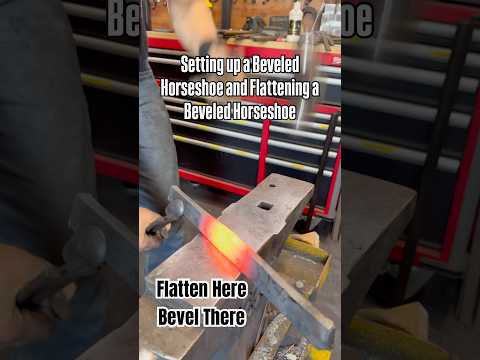
Four videos showing the craft of custom horseshoe creation — from bar stock to finished shoe. Tap any thumbnail to play.