What Are Contracted Heels?
The anatomy of a healthy hoof heel — and what goes wrong when it narrows.
🔬 How a Healthy Hoof Heel Works
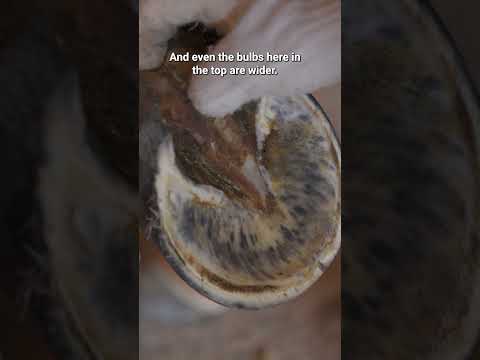
In a correctly conformed, healthy hoof, the heel bulbs are wide, round, and well-separated. The frog is broad, full, and makes ground contact with each step — it acts as the hoof's primary shock absorber and blood pump. When the horse loads the foot, the heels expand outward (decontract), the frog compresses against the ground, and blood is pumped upward through the digital cushion. When weight is lifted, the heels spring back and draw fresh blood down. This pumping mechanism is fundamental to hoof health, circulation, and the long-term viability of the navicular apparatus.
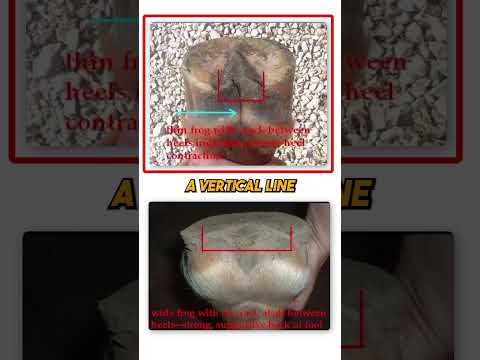
Contracted heels occur when the heel region narrows, the frog loses ground contact and atrophies, and this pumping mechanism is compromised. The central sulcus (the groove down the middle of the frog) becomes deep and slit-like — sometimes so deep a hoof pick disappears entirely — creating the perfect anaerobic pocket for thrush. The heels grow taller and more upright rather than widening, the hoof takes on a narrow, boxy, or "mule-footed" appearance, and the entire caudal (rear) portion of the hoof becomes progressively less functional.
Contraction is a self-reinforcing problem: narrow heels → reduced frog contact → less pumping → reduced circulation → weaker, narrower horn → further contraction. Breaking this cycle requires patient, sustained farrier intervention.
📐 How to Identify Contracted Heels
Look at the foot from behind and below:
- From behind — the heel bulbs should be round and generous; contracted heels look pinched, close together, and tall rather than wide
- From the sole — the frog should occupy at least one-third of the solar surface; a small, shrunken, or atrophied frog indicates contraction
- Central sulcus depth — in a healthy foot, a hoof pick enters the central sulcus a short distance; in a contracted foot, the pick disappears to the handle
- Heel width measurement — in a correctly proportioned foot, the width at the heels should be roughly equal to the width at the widest part of the foot; in contracted heels, this ratio is lost
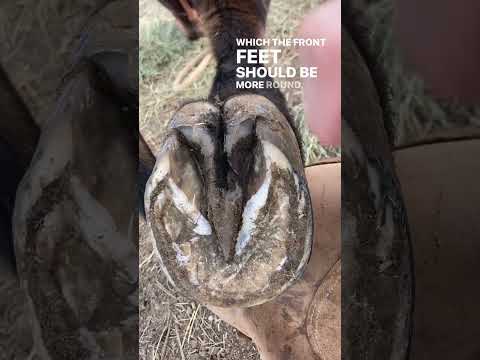
- Hoof shape from front — contracted feet often appear tall and narrow rather than round; the hoof pastern axis may be broken back
🔗 The Secondary Problems It Creates
Contracted heels are a root cause, not just a problem in themselves:
- Chronic thrush — the deep, narrow central sulcus is thrush's ideal habitat; contracted-heel horses develop recurrent thrush that resolves temporarily with treatment but returns until the contraction itself is addressed
- Recurrent abscesses — reduced circulation and deeper sulci increase abscess frequency
- Navicular syndrome — contracted heels concentrate loading on the navicular apparatus and reduce the blood pumping that keeps the navicular region healthy; many navicular horses have concurrent heel contraction
- Sheared heels — when one heel is more contracted than the other, it sits higher, creating the shear forces between heel bulbs that characterize sheared heels (Issue #9)
- Reduced performance — less heel expansion means less shock absorption and less proprioceptive feedback from the ground; horses with contracted heels often feel "choppy" or "stiff" behind even without overt lameness
🐎 Which Horses Are Most Affected
Contracted heels are more common in:
- Shod horses — shoes limit the natural heel expansion that occurs with each stride; long shoeing intervals make this worse as heels grow inward
- Horses with long toe / low heel conformation — the LTLH foot commonly develops underrun heels that grow forward and inward rather than down
- Horses kept on dry, hard footing — dry horn is less pliable and doesn't expand as readily; wet footing allows more natural expansion
- Horses with pain-related toe landing — any condition causing the horse to land toe-first rather than heel-first removes the frog ground contact that stimulates expansion
- Thoroughbreds and horses with naturally upright pasterns — conformational factors that increase heel loading paradoxically often lead to heel contraction through pain-avoidance gait changes
The Vicious Cycle of Heel Contraction
Understanding how contraction perpetuates itself is essential to breaking it. Each step in the cycle makes the next step worse.
Initial Trigger
Pain in the heel region (navicular discomfort, thrush, bruising, abscess) causes the horse to land toe-first, unloading the painful heels. Alternatively, a shoe fitted too narrow, or long intervals between shoeings, directly restricts heel expansion mechanically.
Reduced Frog Contact
With the horse landing toe-first, the frog no longer makes regular ground contact. Without the compression stimulus of ground contact, the frog begins to shrink and atrophy. The central sulcus deepens as the surrounding frog tissue retracts.
Loss of Heel Expansion
Without heel-first landing and frog ground contact, the natural expansion mechanism stops working. The heels grow taller and more vertical rather than expanding outward, the horn at the heel quarters thickens and tightens, and the heel width progressively narrows.
Reduced Circulation
The blood-pumping mechanism depends on heel expansion. As heels contract, circulation to the digital cushion, navicular apparatus, and frog tissue diminishes. Weaker circulation means weaker, less resilient horn — which contracts more easily.
Deep Sulcus → Thrush → More Pain
The now-deep central sulcus becomes a thrush habitat. Thrush infection causes additional heel pain, reinforcing the toe-first landing — which reduces frog contact further — which deepens the sulcus further. The cycle tightens.
Progressive Worsening
Without intervention, each cycle makes the next worse. The heels grow progressively narrower, the frog progressively more atrophied, the central sulcus progressively deeper, and secondary conditions (thrush, navicular, abscesses, sheared heels) progressively more established. Breaking the cycle requires addressing both the mechanical cause and any pain that is driving the toe-first landing.
Primary Causes of Heel Contraction
Shoes Fitted Too Narrow or Left On Too Long
A shoe fitted narrower than the hoof's natural width at the heels acts as a mechanical constraint — preventing expansion with each stride. Over successive shoeings, the hoof conforms to the shoe rather than the shoe fitting the hoof. Long shoeing intervals compound the effect by allowing the heels to grow inward over the shoe.
Chronic Toe-First Landing
Any painful condition that causes a horse to consistently land toe-first rather than heel-first removes the expansion stimulus from the heels. The original pain may resolve, but the toe-first landing habit and resulting contraction persist. Identifying and treating the original pain source is essential for rehabilitation.
Long Trimming Intervals
As the hoof grows between farrier visits, the heels grow taller and more upright. Tall, upright heels do not expand as readily as correctly angled heels. Long intervals allow this heel elevation to occur and persist, progressively reducing the expansion with each cycle.
Long Toe / Low Heel Conformation
The long toe pulls the heels forward and under the foot — creating underrun heels that grow forward rather than downward. Underrun heels have a shallow angle relative to the ground and do not expand effectively with landing. This is one of the most common conformational contributors to heel contraction.
Chronically Dry Footing
Dry, hard hooves are less pliable than well-hydrated hooves. The natural expansion mechanism requires horn that can flex slightly with each stride. Horses in very dry climates or kept exclusively on dry, hard surfaces develop horn that is too rigid to expand adequately, gradually tightening over time.
Chronic Thrush
Thrush causes heel pain that drives toe-first landing, which reduces frog contact, which deepens the sulcus, which worsens the thrush environment. Thrush and heel contraction are so intertwined that treating one without the other almost never produces lasting results. They must be addressed simultaneously.
🔗 The Thrush–Contraction Connection: A Two-Way Street
Contracted heels and thrush exist in a self-reinforcing relationship that is critical to understand. Contracted heels create ideal thrush conditions — the deep, narrow, moist central sulcus is exactly the oxygen-free, debris-collecting environment where Fusobacterium necrophorum thrives. Thrush perpetuates contraction — the pain from thrush infection in the sulcus causes the horse to avoid heel loading, reducing the expansion stimulus, which deepens the sulcus further.
This is why thrush that "keeps coming back" despite repeated treatment is often a contracted-heel case in disguise. Treating the thrush without addressing the contraction is like bailing a leaking boat without plugging the hole. The farrier must work to widen the heels and improve frog contact — eliminating the habitat — while thrush treatment is ongoing. Once heel expansion is restored and the frog makes ground contact again, the sulcus shallows naturally and thrush becomes far easier to prevent.
⚡ Quick Reference — Contracted Heels at a Glance
Treatment — Three Roles, Three Approaches
Contracted heel rehabilitation is a long-term farrier project. The vet addresses any underlying pain driving toe-landing. The owner manages environment, thrush treatment, and daily care.
The Farrier's Role — The Long Rehabilitation
Contracted heel rehabilitation is one of the most patient, methodical, and satisfying areas of farrier work. The goal is to progressively restore heel width, frog contact, and natural expansion over a series of trims — typically spanning 9–18 months. There are no shortcuts: horn grows at 3/8 inch per month, and the changes must be maintained through every trim cycle or the contraction returns.
Before touching the hoof, the farrier assesses:
- Degree of contraction — how narrow are the heels relative to normal proportions for this horse's size and breed?
- Frog condition — is the frog atrophied and recessed, or still functional despite the contraction?
- Sulcus depth — is thrush present, and how deep does the central sulcus run?
- Landing pattern — is the horse toe-landing? What is driving it?
- Heel angle and underrun status — are the heels crushed forward (underrun) or upright?
- Whether an underlying condition (navicular, thrush pain, abscess history) is perpetuating the problem
The trim for contracted heels aims to:
- Lower the heels — bringing the heels to the correct angle reduces their upright growth pattern and encourages outward expansion with loading; this is done gradually across trims, not all at once, to avoid stressing the DDFT
- Shorten the toe aggressively — a long toe pulls heels forward and under; shortening toe is essential to allowing heels to grow downward and outward rather than forward
- Open the central sulcus — the farrier may use a hoof knife or Dremel to carefully debride the central sulcus, removing packed debris and thrush-infected tissue, and widening it slightly to allow air access
- Leave the frog alone — the frog should not be pared in a contracted-heel case; every millimeter of frog tissue is needed for ground contact and stimulation
Shoeing strategy for contracted heels prioritizes allowing and encouraging heel expansion — the opposite of the narrow fitting that may have caused or perpetuated the contraction:
- Wide-web shoe fitted full — the shoe is fitted slightly wider than the hoof at the heels (not at the toe), providing a wider platform that allows heels to expand outward without the shoe acting as a constraint; this is the most important shoeing principle in contracted-heel rehabilitation
- Egg bar shoe — extends behind the heels, encouraging the horse to land on a broader heel surface, stimulating frog contact and heel expansion with every step
- Heart bar shoe — the frog-contact bar specifically engages and stimulates the frog, maintaining ground contact even when the horse tries to avoid it; useful for severe contraction; requires precise fitting
- Frog support pads — foam or rubber pads placed between the shoe and sole that press against the frog, providing artificial stimulation of the frog pump until the natural mechanism is restored
For horses that are appropriate candidates — not competing, on soft or varied terrain, without concurrent conditions requiring shoes — going barefoot can dramatically accelerate contracted heel rehabilitation. Without the mechanical constraint of a shoe, the hoof is free to expand with every stride. Regular movement on varied terrain provides constant frog stimulation. Many farriers and hoof care professionals advocate a period of barefoot management (typically 6–12 months) as the most effective rehabilitation for significant heel contraction, followed by return to shoes with wider fitting once expansion is restored. This is not appropriate for all horses — discuss with your farrier based on your horse's specific situation.
Contracted heels require more frequent farrier attention, not less. Allowing the trim to lapse permits the heels to grow taller and narrower again between visits, undoing the expansion progress. Standard protocol during rehabilitation:
- 5–6 week intervals for shod contracted-heel horses (not 8 weeks)
- 4–5 week intervals for barefoot horses during active rehabilitation
- Regular measurement and documentation of heel width at each visit to track progress
- Patience — meaningful expansion takes 3–6 months to be clearly visible; full rehabilitation typically 9–18 months
Thrush must be treated aggressively throughout contracted-heel rehabilitation — it cannot be separated from the structural work. The farrier debrides the central sulcus at each visit, applies topical antiseptic (Thrush Buster, copper sulfate, iodine), and instructs the owner on the daily home treatment protocol. See our full Thrush guide for the complete treatment protocol.
Wide-Web Shoe Fitted Full
A wider-than-standard shoe fitted with extra width at the heels — allowing outward expansion without constraint. The single most important shoeing change for contracted-heel rehabilitation. The shoe provides support without restricting the heel's natural flex.
Heart Bar Shoe
A bar that contacts and stimulates the frog directly. Forces frog engagement even in a horse trying to avoid heel loading. Requires precise fitting — too much frog pressure causes pain; too little defeats the purpose.
Frog Support Pad (Foam)
Medium-density foam pad placed between shoe and sole, compressed against the frog to provide stimulation with each stride. Less precise than a heart bar but easier to fit; useful for moderate contraction cases.
Egg Bar Shoe
Extends behind the heels to provide a broader landing surface. Encourages heel-first or flat landing, stimulating frog contact and expansion. Often combined with a frog support pad for contracted-heel rehabilitation.
Contracted heel rehabilitation happens slowly enough that it's easy to miss progress — or lack of it. Ask your farrier to measure and record the heel width (inside distance between heel bulbs) at every visit. A simple measurement in millimeters, recorded in a notebook, tells you whether the rehabilitation is working over months of treatment. Visual assessment alone is unreliable at the slow pace of hoof changes. Numbers give you — and your farrier — real accountability.
The Veterinarian's Role — Identifying and Treating the Pain Driving Contraction
The vet's primary role in contracted heel cases is identifying whether an underlying painful condition is perpetuating the toe-first landing and contraction cycle. You cannot fully rehabilitate contracted heels if the horse continues to avoid heel loading due to unresolved pain — the biology will keep working against you.
A horse with contracted heels and persistent toe-first landing despite good farrier care needs a lameness evaluation. The vet assesses:
- Which limb(s) are affected and the degree of any gait abnormality
- Digital pulse and hoof temperature — bounding pulse suggests active inflammation in the heel region
- Response to hoof testers — localize pain within the heel region
- Flexion tests — rule out higher limb involvement
- Nerve blocks — confirm whether pain is in the caudal heel (navicular region) or more diffuse
X-rays of the contracted foot reveal:
- Navicular bone changes that may be driving the pain-avoidance toe landing
- Coffin bone position and angle relative to the hoof wall — helpful for guiding trim decisions
- Digital cushion thickness — the digital cushion (the shock-absorbing structure inside the heel) atrophies in contracted heels; its thickness on radiograph reflects the degree and duration of contraction
- Heel height and angle measurements that inform the farrier's trim strategy
Contracted heels and navicular syndrome frequently co-exist and perpetuate each other. If the lameness evaluation implicates the navicular apparatus, the vet prescribes the appropriate navicular treatment alongside the farrier's contracted-heel rehabilitation:
- NSAIDs (phenylbutazone or firocoxib) for pain management that allows more normal landing
- Bursal or coffin joint injections to reduce heel-region inflammation
- Bisphosphonates (Tildren, Osphos) if navicular bone changes are established
In horses with bilateral (both front feet) significant contraction, consider:
- PPID (Cushing's disease) — reduced horn quality and immune function; can affect frog and heel tissue health, impairing the expansion mechanism
- Chronic low-grade laminitis — bilateral front foot pain from laminitis drives toe-first landing in both fronts simultaneously; radiographs may reveal early coffin bone rotation that explains the bilateral contraction pattern
Contracted heels are almost always a consequence of something else — a pain that caused toe landing, a shoe that was too narrow, or a management factor that drove the cycle. Treating the contraction mechanically without identifying and fixing the original cause means the contraction will return. If your horse's heels aren't expanding despite months of corrective farrier care, call your vet — there is likely an unresolved pain source perpetuating the toe-first landing pattern.
The Horse Owner's Role — Movement, Moisture, Thrush Control, Patience
Contracted heel rehabilitation requires the owner's daily commitment over many months. The farrier corrects the trim and shoe; the owner manages the environment that either supports or undermines the rehabilitation between visits. Three things matter most: movement, moisture, and thrush control.
Movement is the single most important owner contribution to contracted heel rehabilitation. Every heel-first landing step provides the frog compression that stimulates expansion. A stalled horse with minimal turnout recovers from heel contraction far more slowly than one with daily movement on varied terrain. Practical steps:
- Maximize turnout time on appropriate footing — grass paddocks, arena, varied terrain
- Daily hand walking or in-hand work if turnout is limited
- Avoid prolonged stall rest unless medically necessary during rehabilitation
- Light riding work is generally beneficial — the rhythmic heel landing of walking and trotting on good footing provides exactly the stimulation needed
- Avoid prolonged standing on hard concrete or packed gravel — this is too rigid to allow the micro-expansion that stimulates the mechanism
Horn hydration affects pliability, and pliable horn expands more readily than dry, rigid horn. During rehabilitation:
- If the horse lives in a very dry environment, brief daily soaking of the feet (standing in shallow water for 10–15 minutes) can increase horn pliability and support expansion — follow with light turnout while the horn is still supple
- Apply a water-based hoof conditioner (not a petroleum-based oil) to the heel bulbs and frog area to maintain horn flexibility
- Avoid the opposite extreme — horses standing in deep mud or wet urine-saturated bedding develop overly soft, weak horn that doesn't hold shape; this worsens contraction by weakening the heel structure
- Consistent moisture — not wet-dry cycling — is the goal
While the heels are contracting, the deep central sulcus will have thrush — it is almost universal. Daily thrush treatment is required throughout the entire rehabilitation period:
- Pick and clean the central sulcus every single day — remove all packed debris
- Apply Thrush Buster, Kopertox, or dilute iodine into the sulcus daily
- For deep slit-like sulci, pack with ichthammol or cotton soaked in treatment product
- Do not stop thrush treatment when the horse appears comfortable — treat until the sulcus visibly shallows as the heels expand
- See the full Thrush guide for complete treatment protocols
Footing significantly affects the quality and quantity of heel stimulation the horse receives between farrier visits:
- Best — varied natural terrain (grass, soft dirt, gentle gravel) that provides stimulation without being too hard or too soft
- Good — well-maintained arena sand at 3–4 inches depth
- Acceptable — grass paddock on reasonably firm ground
- Poor — deep soft mud (no resistance for proper landing) or hard concrete/asphalt (too rigid, no give)
- Some advocates recommend — controlled turnout on pea gravel, which provides gentle stimulation of the frog and sole with every step; some horses benefit greatly from this during rehabilitation
Quality horn expands more readily than weak, brittle horn. Support hoof horn quality throughout the rehabilitation:
- Biotin 20mg/day — best-supported hoof supplement; allow 6–9 months for full effect
- Zinc and copper — critical for keratin cross-linking and strong horn structure
- Omega-3 fatty acids — improve horn flexibility and reduce systemic inflammation
- Begin supplementation at the start of rehabilitation — nutritional support can make a measurable difference to the quality of new horn growing down from the coronary band during the 9–18 month rehabilitation period
Contracted heel rehabilitation takes 9–18 months. Many owners give up at 3–4 months when they can't see obvious improvement — but the changes happening inside the hoof are real even when not visually dramatic yet. If your farrier is measuring heel width and the trend is improving, even slowly, the rehabilitation is working. The horses that fail to rehabilitate are almost always the ones where the owner's commitment to the schedule, the daily thrush treatment, or the movement requirements lapses before the heels have had time to fully expand.
Prevention — Keeping Heels Wide and Functional
Strict Shoeing Schedule
Heels grow taller and narrower between farrier visits. A 5–6 week maximum interval prevents the heel elevation that initiates contraction. For horses already showing some narrowing, 4–5 weeks. The shoeing schedule is the most important single preventive factor.
Shoes Fitted Full at the Heels
Insist your farrier fits shoes to the full width of the hoof at the heels — never narrower. A shoe that is even a few millimeters too narrow at the branches mechanically prevents expansion with every stride. Ask to see the fit before the shoe is nailed on.
Regular Movement
Daily movement is preventive medicine for heel contraction. A horse that walks and trots regularly on appropriate footing naturally stimulates the frog pump mechanism that keeps heels wide. Prolonged stall confinement without daily exercise is a contraction risk.
Daily Hoof Picking and Thrush Vigilance
Daily picking prevents the packed debris and thrush that deepen the central sulcus and drive pain-avoidance toe landing. Catching and treating thrush early — before it causes heel pain — prevents the toe-landing habit that initiates the contraction cycle.
Address Heel Pain Early
Any condition causing heel pain — navicular soreness, a bruise, an abscess — should be identified and treated promptly. The longer a horse compensates with toe-first landing, the more established the contraction pattern becomes. Don't wait to see if heel pain "resolves on its own."
Maintain Horn Pliability
In very dry climates, occasional footing on moist ground or brief daily hoof soaking keeps horn pliable enough to expand naturally. Chronically dry, rigid horn cannot expand with landing regardless of trim — moisture management is an underappreciated prevention tool.
Contracted Heels Videos — Watch & Learn
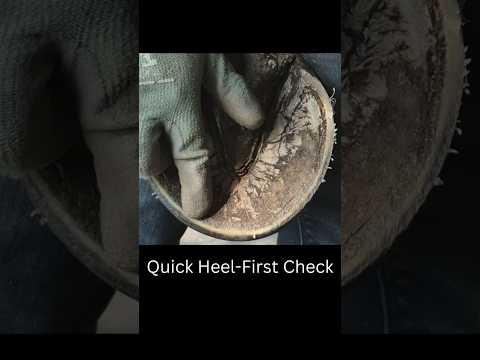
See the thrush connection explained, heel-first landing assessed, and severe contraction rehabilitated by experienced hoof care professionals.