What Is Thrush?
The biology, cause, and anatomy of the most common hoof infection in horses.
🦠 The Organism
Thrush is a bacterial infection of the hoof, primarily caused by Fusobacterium necrophorum — an anaerobic bacterium that thrives in the absence of oxygen. Wet, packed manure and mud in the hoof sulci create exactly the oxygen-free environment this organism needs to multiply. Secondary opportunistic bacteria and fungi often join the infection, accelerating tissue destruction.
📍 Where It Strikes
Thrush targets the frog — specifically the central sulcus (the groove running down the middle of the frog) and the collateral sulci (the grooves on either side). In healthy hooves these grooves are shallow and self-cleaning. When they become deep, narrow, or chronically packed with debris, they become perfect anaerobic pockets for infection to take hold.
⚡ Why It Happens
Thrush is largely a management and environment problem, not a random disease. Key risk factors include:
- Standing in mud, wet stalls, or saturated paddocks
- Infrequent hoof picking — daily cleaning is the single best prevention
- Long trimming intervals allowing deep, contracted sulci to form
- Contracted heels creating abnormally deep central sulci
- Horses on stall rest with limited movement
- Poor nutrition reducing overall hoof horn quality
How to Identify Thrush
Know the signs before it progresses — early detection saves weeks of treatment.
🔍 Thrush Severity Stages — What You Will See and Smell
Stage 1
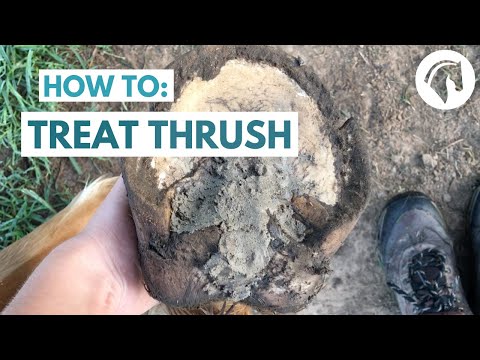
Faint foul odor when picking the hoof. Shallow black or dark gray discoloration in the sulci. The frog tissue appears slightly soft or crumbly at the surface but the structure is intact. Horse shows no sensitivity to hoof pick pressure. This is the easiest and fastest stage to treat.
Stage 2
Strong, distinctly foul black discharge when the sulci are probed. The frog begins to look ragged, eaten away, or has visible crevices. Horse may flinch or pull away when the central sulcus is probed with a hoof pick. Some horses show a subtle change in gait. The central sulcus may appear slit-like and very deep. Active farrier and diligent daily owner treatment required.
Stage 3
Copious black, watery, foul-smelling discharge. Frog tissue is severely undermined, ragged, or partially sloughing. The infection has penetrated into the sensitive frog or sensitive laminae. Visible bleeding when tissue is debrided. Horse is lame or significantly foot-sore. Veterinary examination required — systemic antibiotics may be indicated. Do not attempt to treat this stage without professional guidance.
⚡ Quick Reference — Thrush at a Glance
Treatment — Three Roles, Three Approaches
Successful thrush treatment requires coordination between the farrier, the veterinarian, and the horse owner. Each role has a distinct set of responsibilities.
The Farrier's Role in Thrush Treatment
The farrier is the first line of defense. They have the tools, training, and hands-on hoof knowledge to debride infected tissue, reshape the foot to prevent recurrence, and recommend or apply appropriate topical treatments. Many cases of thrush are caught by the farrier during routine visits before the owner has noticed any signs.
Before touching the hoof, the farrier assesses overall foot balance, heel conformation, and sulcus depth. Contracted heels and narrow, deep central sulci are both a cause and consequence of chronic thrush. The farrier notes severity stage, which sulci are affected, and whether sensitive tissue may be involved.
Using a sharp hoof knife, the farrier carefully removes all necrotic (dead, black, infected) frog tissue. This is the single most important treatment step — topical products cannot penetrate and kill bacteria buried under dead tissue. The farrier opens up the sulci so air can reach the infection. In mild to moderate cases, this alone may resolve the infection within days. Bleeding during debridement indicates proximity to sensitive tissue and signals the farrier to stop and potentially defer to a veterinarian.
Thrush thrives in deep, packed sulci. Where appropriate, the farrier adjusts the trim to:
- Open the central sulcus — widening a slit-like sulcus so it can self-clean and receive air
- Relieve contracted heels — widening heel quarters over successive trims to reduce sulcus depth
- Reduce the trimming interval — often recommending 4–5 week cycles instead of 8 weeks for affected horses
- Correct breakover and balance to promote healthy frog loading and natural self-cleaning movement
After debridement, the farrier applies a topical antiseptic directly into the cleaned sulci. The goal is to kill remaining bacteria and create an inhospitable environment for regrowth. Common farrier-applied treatments include iodine-based solutions (7% tincture of iodine), copper sulfate, or commercial products such as Thrush Buster, Kopertox, or Clean Trax. The farrier will typically recommend the owner continue applications daily.
For deep central sulcus thrush, the farrier may pack the treated sulcus with medicated gauze, cotton soaked in iodine or diluted bleach, or commercial packing products. This maintains antiseptic contact with the deepest part of the infection between owner treatments. The farrier instructs the owner on how to remove, check, and replace the packing.
In chronic or recurrent thrush, the farrier may recommend shoeing changes to support recovery:
- Wide-web shoes — reduce mud and debris packing into sulci
- Bar shoes or egg bar shoes — increase frog support and ground contact, stimulating circulation and natural self-cleaning
- Going barefoot — in appropriate environments, barefoot horses with good movement often have lower thrush rates due to natural frog flexion and self-cleaning
If debridement produces bleeding, if the horse shows extreme sensitivity suggesting sensitive laminae involvement, or if the infection has clearly breached the white line or shows signs extending into deeper structures — the farrier should defer to veterinary assessment before proceeding. Cutting into sensitive tissue without proper pain management and sterile technique is harmful, not helpful.
The Veterinarian's Role in Thrush Treatment
Most mild-to-moderate thrush cases don't require a vet call. However, once thrush has progressed to Stage 2 or 3 — especially when lameness is present, sensitive tissue is exposed, or the infection is chronic and non-responsive to farrier care — veterinary involvement becomes essential.
The vet performs a full lameness workup to determine whether the thrush is the primary cause of any gait change, or whether an underlying condition (navicular disease, laminitis, white line disease) has created the contracted heels and deep sulci that allowed thrush to develop. Distinguishing between these conditions changes the treatment plan significantly.
For severe cases where debridement into sensitive tissue is required, the vet administers a palmar digital nerve block (regional anesthesia of the foot) so the horse can tolerate thorough cleaning and debridement without pain. This allows the farrier and vet to work together to fully clean the infection without the horse pulling away.
The vet may use surgical instruments to debride more aggressively than a farrier can without anesthesia, and may irrigate the sulci with antiseptic solutions (dilute iodine, chlorhexidine, or hydrogen peroxide) using a syringe to flush bacteria from inaccessible pockets. For severe cases, the vet may place a drain or pack the cavity with antibiotic-impregnated material.
The vet may prescribe treatments not available over the counter:
- Metronidazole paste or gel — an antibiotic with specific efficacy against anaerobic bacteria including Fusobacterium necrophorum; applied directly into sulci
- Chlorhexidine solution (2%) — prescription-strength antiseptic irrigation
- DMSO combinations — dimethyl sulfoxide used as a carrier to drive antibiotics deeper into tissue
- Silver sulfadiazine cream — broad-spectrum antimicrobial used in difficult chronic cases
In cases where the infection has spread to sensitive tissue or shows signs of systemic involvement (fever, swelling up the leg, cellulitis), the vet may prescribe systemic antibiotics — typically trimethoprim-sulfamethoxazole (TMS) or penicillin. Systemic antibiotic use for thrush is reserved for serious infections and should not be requested for routine cases.
If the vet identifies a predisposing condition — contracted heels from navicular syndrome, chronic laminitis rotation creating abnormal hoof loading, PPID (Cushing's disease) reducing immune function — treating the underlying condition is essential to preventing thrush recurrence. Thrush that keeps coming back despite good management is almost always a symptom of a deeper problem.
Call your vet if your horse is lame and you see thrush signs, if you see bleeding during at-home treatment, if the infection doesn't improve after 2 weeks of diligent farrier and owner care, if the central sulcus is so deep a hoof pick disappears into it, or if you see swelling above the hoof.
Metronidazole Gel
Antibiotic with specific anaerobic activity. Compounded by equine pharmacy, applied daily into sulci. Most effective prescription option for stubborn thrush.
TMS Oral Antibiotic
Trimethoprim-sulfamethoxazole tablets. For systemic involvement only — deep infection with signs of spread beyond the hoof capsule.
2% Chlorhexidine Solution
Broad-spectrum antiseptic used for irrigation. Can be diluted for daily soaks. Available OTC in lower concentrations; 2% requires vet guidance.
Silver Sulfadiazine Cream
Broad-spectrum antimicrobial cream. Used for severe or chronic cases where tissue is exposed or has broken down. Requires vet prescription.
The Horse Owner's Role in Thrush Treatment
The horse owner is the most important player in thrush treatment — because you see the horse every day. Farrier visits happen every 6–8 weeks. The vet comes when called. But you're there daily, and daily treatment is what cures thrush. Here's exactly what to do.
No step matters more. Pick out all four hooves every day, even on days you don't ride. Use a stiff brush after picking to remove residual debris from the sulci. As you pick, check the frog for odor and soft spots. This daily habit both treats existing thrush by removing the anaerobic debris and prevents new thrush by denying the bacteria its environment.
After picking and brushing, apply your chosen treatment product directly into the sulci. The most common and effective home treatments are:
- Thrush Buster — purple-staining, long-lasting, widely regarded as the most effective OTC product; apply every 2–3 days for mild cases, daily for moderate
- Kopertox (copper naphthenate) — green solution, very effective; apply daily to every-other-day
- Pete's Goo / homemade mixture — triple antibiotic ointment mixed with athletes foot cream; effective for packing into deep sulci
- 7% Tincture of Iodine — inexpensive and effective; apply daily with a small syringe or brush
- White Lightning or Clean Trax — chlorine dioxide-based; used as soaks for 45 minutes; excellent for moderate cases
- Dilute bleach (1:10 ratio, water:bleach) — last resort; effective but can dry and damage healthy hoof tissue with overuse
Treatment applied to a horse standing in wet manure is a losing battle. Environment management is non-negotiable:
- Stall maintenance — strip stalls daily, not just spot-clean; wet, deep bedding is thrush's best friend
- Paddock drainage — add gravel, sand, or crusher-run footing to chronically wet areas; concentrate footing near water troughs, gate entries, and shelter areas where horses stand
- Temporary dry housing — even 12 hours per day in a dry stall or run-in can break the infection cycle during treatment
- Muddy pastures — if drainage improvement isn't possible during the wet season, consider a sacrificial dry paddock for the worst weather months
For deep central sulcus thrush where topical liquids run off before penetrating, packing is more effective. After your farrier or vet shows you the technique:
- Clean and dry the sulcus thoroughly
- Roll a small amount of cotton into a thin rope shape
- Soak the cotton in your chosen treatment (iodine, Thrush Buster, or Pete's Goo)
- Use a blunt instrument (back of a hoof pick) to tuck the cotton gently into the sulcus
- Check and replace daily — remove old cotton before reapplying fresh
- Stop packing if you see bleeding — contact your farrier or vet
With consistent daily treatment, mild thrush should show clear improvement within 5–7 days and resolve within 2 weeks. Moderate thrush may take 4–8 weeks of daily care. Signs of improvement: odor decreasing, frog tissue firming up, pink healthy tissue visible at sulcus margins. Escalate to your farrier or vet if: the horse becomes lame, you see bleeding during treatment, there is no improvement after 2 weeks of daily care, or the infection appears to be spreading.
Thrush Buster
Purple-staining, long-lasting formula. One of the most widely used and effective OTC thrush treatments. Apply every 2–3 days after picking — stains skin and clothing.
Kopertox
Copper naphthenate solution. Green-colored, penetrating antiseptic. Apply daily with a small brush into the sulci. Highly effective for mild to moderate thrush.
White Lightning
Chlorine dioxide treatment used as a 45-minute soak in a sealed hoof boot. Excellent for moderate deep-sulcus cases. Combine with good debridement for best results.
Pete's Goo
Mix equal parts triple antibiotic ointment and antifungal foot cream (clotrimazole or miconazole). Pack into deep sulci. Stays in place better than liquid products.
7% Iodine Tincture
Inexpensive, effective, widely available. Apply daily with a small syringe or cotton ball into sulci. Dries hoof tissue with prolonged use — avoid on healthy frog.
Clean Trax
Chlorine dioxide soak system. Used in a hoof boot for 30–45 minutes. Reaches bacteria in areas topical products miss. Effective for chronic recurrent thrush.
Many thrush treatments — especially iodine, Kopertox, and bleach — will stain skin and clothing permanently. Wear gloves and old clothes. Work in a well-ventilated area. Keep products away from eyes. If you get copper naphthenate (Kopertox) on your hands, nail polish remover will remove the green stain.
Prevention — Keeping Thrush From Coming Back
Curing thrush is straightforward. Preventing recurrence requires changing the conditions that caused it.
Daily Hoof Picking
Pick all four hooves every single day. This is the single most effective prevention measure. No product, no shoe, no supplement substitutes for it.
Dry Stall Bedding
Strip stalls completely at least once per week. Spot clean daily. Deep, wet bedding packed into hooves is thrush's primary breeding ground. Choose bedding that dries quickly — kiln-dried shavings over straw.
Dry Footing in High-Traffic Areas
Add gravel, pea gravel, road base, or sand to wet paddock areas, especially around water troughs, gates, and shelter entries where horses congregate and stand.
Regular Farrier Schedule
Long-overdue trims allow frog overgrowth that traps debris in deep sulci. 6–8 week cycles for shod horses; 4–6 weeks for barefoot horses prone to thrush.
Exercise and Movement
Movement compresses and expands the hoof capsule, pumping debris out of sulci and improving circulation. Stalled horses with minimal turnout have significantly higher thrush rates.
Hoof-Supportive Nutrition
Biotin (20mg/day), zinc, methionine, and omega-3 fatty acids support healthy hoof horn quality. Dense, quality horn is more resistant to bacterial invasion. See our Nutrition & Hooves guide.
Thrush — Frequently Asked Questions
Thrush Videos — Watch & Learn
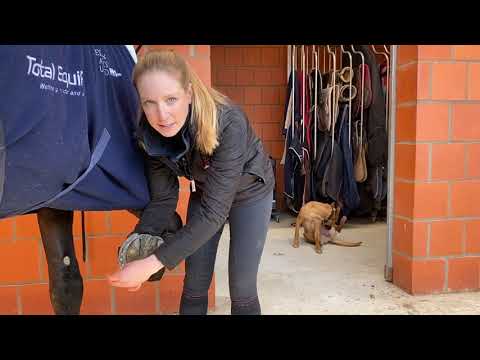
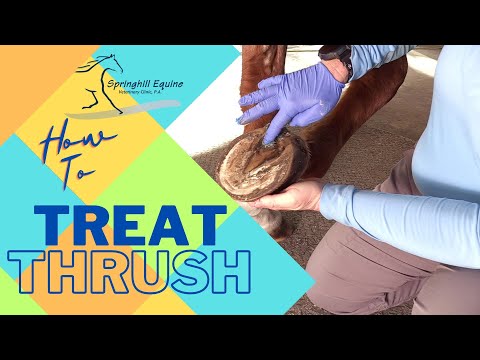
Real horses, real cases — see thrush identified and treated by horse owners, farriers, and a veterinary clinic.